Gliosis and Innate Inflammation in Glaucoma
Neuroinflammation and Astrogliosis contribute to neuronal death in diseases of the retina and brain. Our work showed that myeloid cells play a role in retinal ganglion cell death in a mouse model of glaucoma. We are currently pursuing both basic, translational, and clinical projects studying the role resident microglia and infiltrating macrophages play in glaucoma.
Deuterated Docosahexaenoic Acid (D-DHA) and Glaucoma
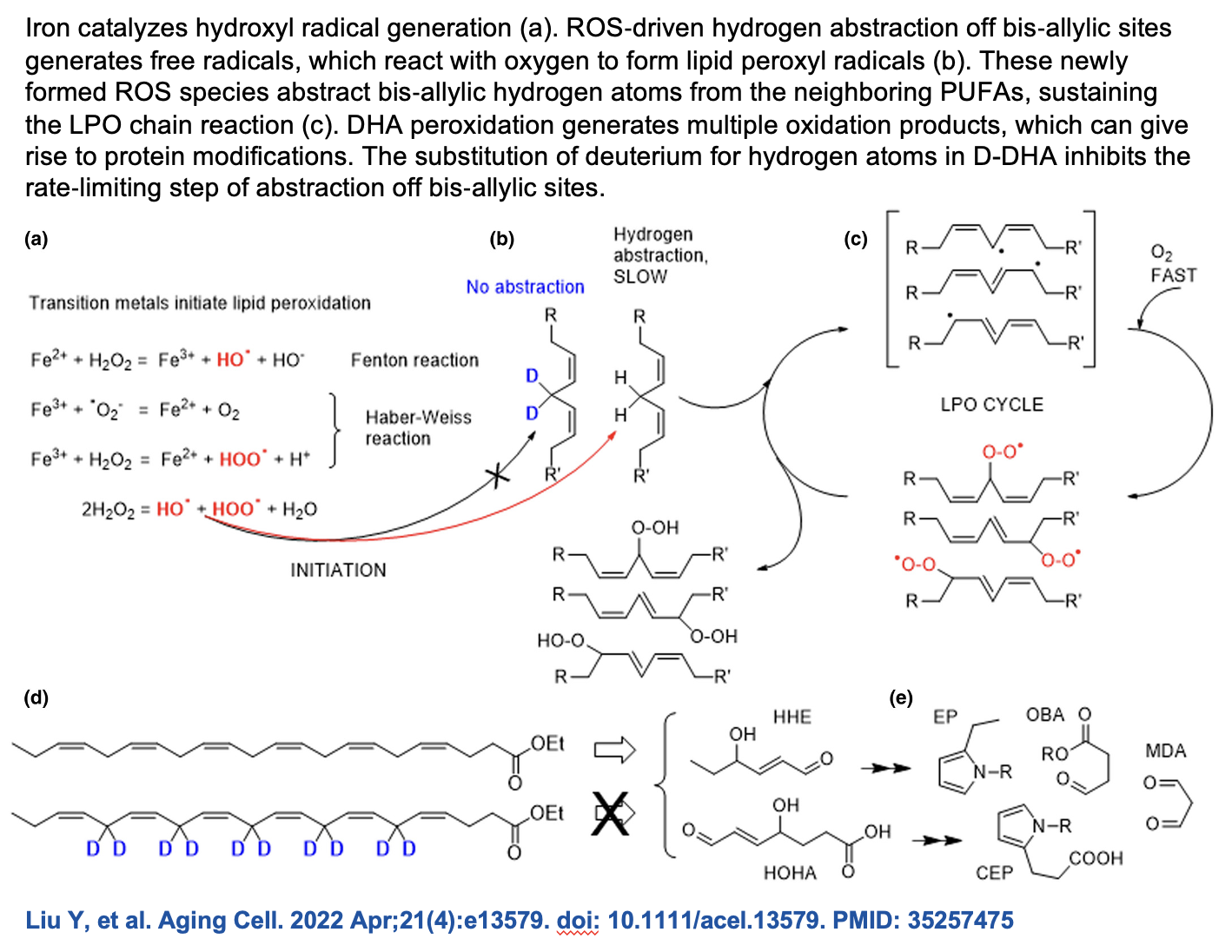
Polyunsaturated fatty acids (PUFAs), abundant in plasma and mitochondrial membranes, are vulnerable to oxidative stress-induced lipid peroxidation (LPO). Substitution of hydrogen atoms with deuterium atoms at bis-allylic sites (D-DHA) can slow down LPO chain reactions. Dietary supplementation with D-DHA has been shown to be neuroprotective in multiple retinal degenerative conditions. Our team is currently examining whether dietary supplementation with D-DHA and other deuterated PFUAs confers glaucoma neuroprotection.
Iron Toxicity in Glaucoma
Although iron plays a crucial role in cellular metabolism, in excess it induces oxidative stress resulting in neuronal death. Oxidative stress has long been implicated in glaucoma pathogenesis. In close collaboration with the Dunaief lab, we are evaluating iron chelation as a neuroprotective mechanism in glaucoma.

Mitochondrial Dysfunction and Glaucoma
Retinal ganglion cells and the optic nerve are susceptible to mitochondrial dysfunction, which results in increased oxidative stress and impaired ATP synthesis. In collaboration with the Wallace lab, we are evaluating the ocular phenotype in both mouse and humans with mitochondrial DNA mutations affecting the electron transport chain. Our study tests for a direct connection between genetically-determined mitochondrial dysfunction and glaucoma.
